Dolphin Joins Humans Playing Catch in Mexico, Showcasing Real-Time Coordination
A dolphin has been recorded playing catch with people off a dock in Puerto Aventuras, Mexico, turning a casual moment into a demonstration of timing, attention, and coordination across species.
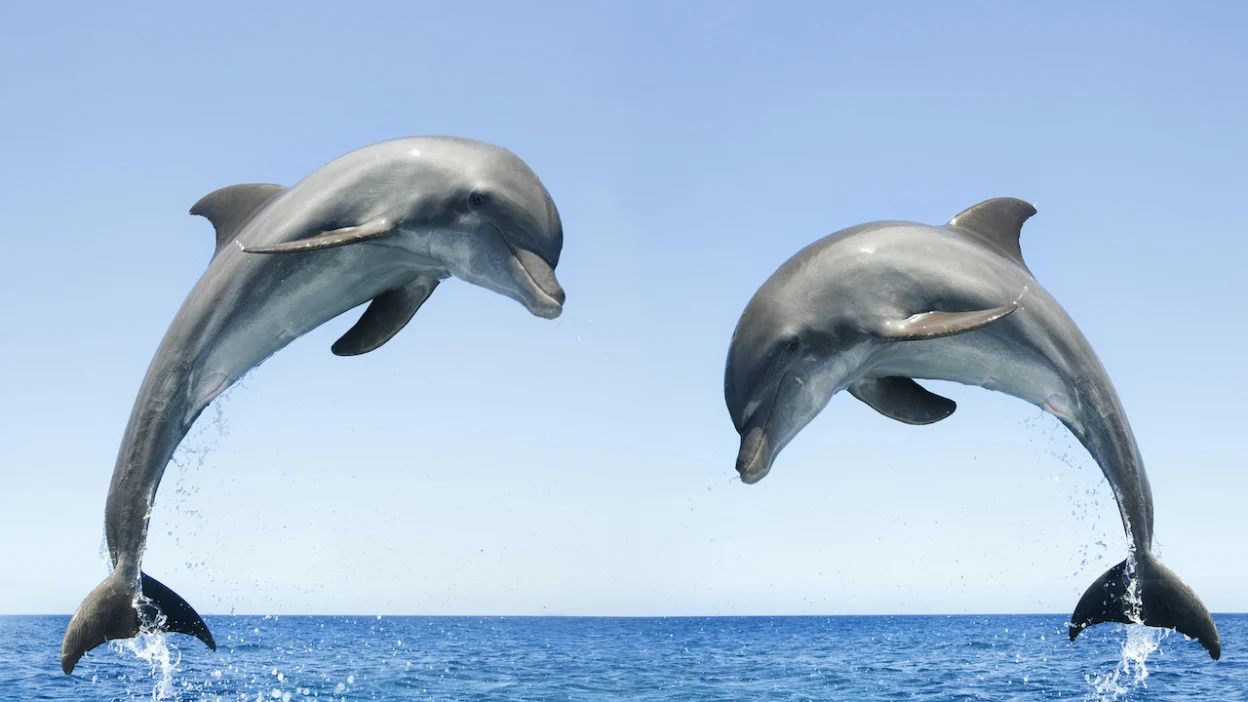
The interaction has drawn attention after a video shared by AccuWeather showed a dolphin actively participating in playing catch with a group of men by the water. The dolphin initiated the exchange, tossing a football toward a man standing on a dock.
The man returned the throw, and although the dolphin narrowly missed one catch, it quickly retrieved the ball and delivered a controlled throw back. The sequence repeated with a level of consistency that suggests responsive engagement.
Dolphins are widely recognized for their cognitive abilities, including pattern recognition, mimicry, and social learning. These traits enable them to interpret human gestures and respond in ways that appear coordinated.
From a behavioral perspective, playing catch requires more than motor ability. It involves anticipation, visual tracking, and adaptive response, functions linked to higher-order neural processing.
Dolphins possess large, complex brains relative to body size, and studies have shown their capacity for cooperative tasks and synchronized movement.

Activities like playing catch may stimulate these systems in ways similar to structured play observed in primates and certain bird species.
Another aspect that supports such interactions is the dolphin’s unique physiology. Unlike humans, dolphins do not breathe automatically. Their voluntary respiratory system requires conscious control, meaning they must remain partially alert even during rest.
This is managed through unihemispheric sleep, where one half of the brain remains active while the other rests. The same mechanism allows them to maintain awareness of their environment, which may contribute to their responsiveness during interactions like playing catch.
Whether spontaneous or learned, the interaction has turned a routine act, playing catch, into a demonstration of shared awareness across species.
Explore the full "Make Your Brain Work" Daily Pages →